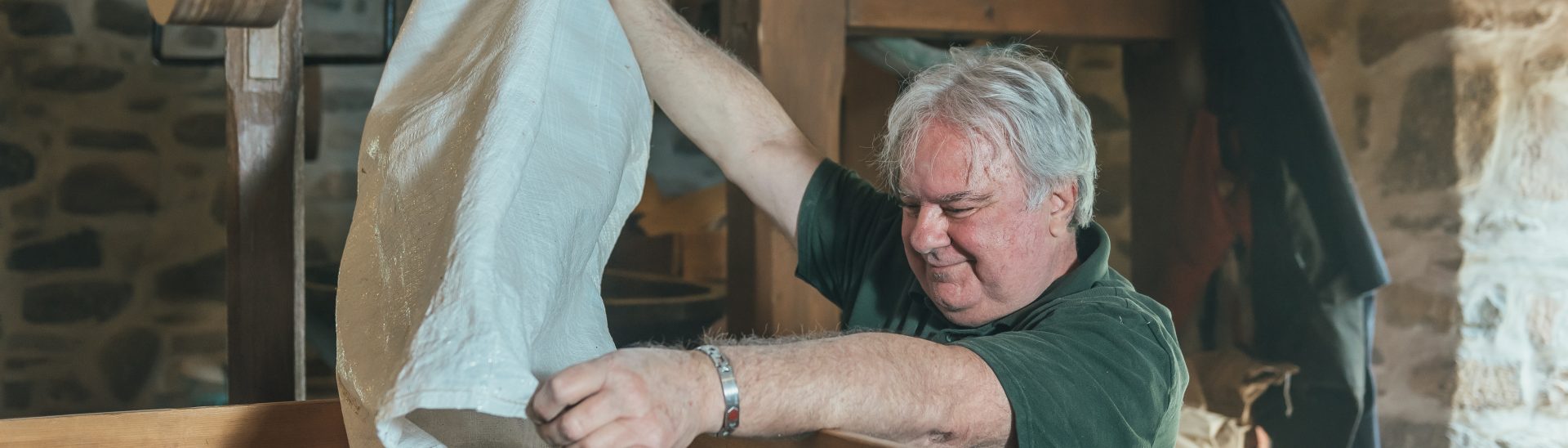
Sharp senses needed
- Accueil
- Sharp senses needed
The miller’s trade isn’t something you can learn in school. For centuries, this precious knowledge has been passed down from generation to generation.
An apprentice miller learns from a master. In fact there can only be one miller per mill. The apprentice cannot take over until the master miller leaves.
Artisanal milling was designated part of Quebec’s intangible heritage in 2022, and in 2023 a training program was introduced to help pass along this invaluable know-how.
Millers have to use all their senses to produce good flour: listening to the machinery, watching, touching, smelling, and tasting the grist to ensure top quality. All this experience comes with time.

Like in the olden days
Artisanal milling is sort of a mirror on the past, a trip back in time. Millers perform the same tasks and hear the same sounds as their predecessors did 250 years ago.

Millers have to listen carefully to make sure the mill is running properly. The sound of the mill is like a symphony to them. If the machinery makes an odd noise, like a false note, the miller knows that something is wrong and has to react quickly.